
Are crash games taking over the world thanks to their captivating gameplay and music?
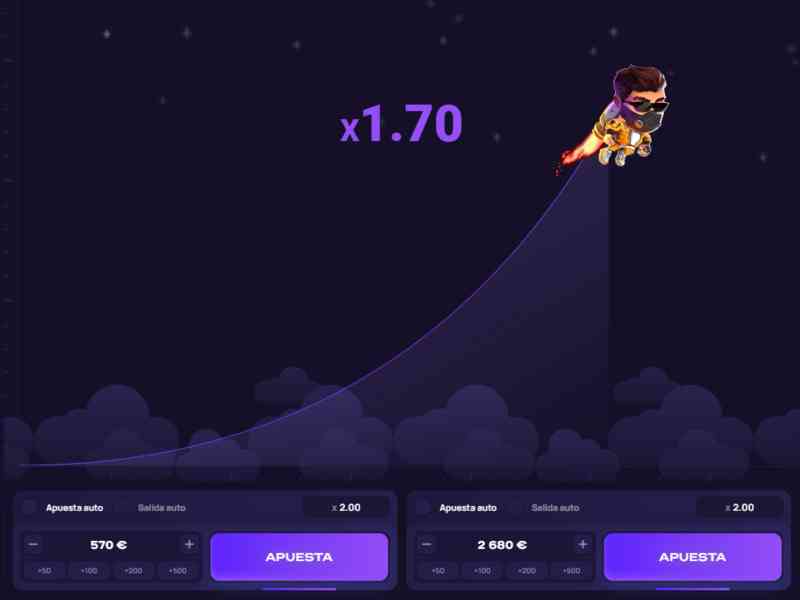
In recent years, crash games have burst into online entertainment at breakneck speed and have literally conquered players all over the world. Every day, millions of people from all sorts of countries choose this very format to try their luck and get a rush of excitement. What is hidden behind this phenomenon, and why are crash games so irresistible? In this article, we will explore which psychological mechanisms underlie their popularity and why they continue to gain momentum.
Crash games are winning over different countries thanks to their simplicity and accessibility
The crash game format has spread at an astonishing pace. All you need is internet access to find yourself at the center of the action in just a couple of clicks. Modern platforms do not require lengthy registration or complicated settings—players can start playing almost instantly. The universality of this entertainment is striking: crash games are equally appealing to beginners and experienced thrill-seekers, to the young and the old, to residents of big cities and small towns.
To find out how popular these games are, we studied the most popular titles in the genre. According to the data we find here, Lucky Jet is currently at the top of the popularity charts. The authors of one of the analytical sites in the iGaming field reported that the reasons for the popularity of these games include well-crafted design, engaging gameplay, and vibrant musical accompaniment.
The psychology of risk and excitement explains why people come back again and again
At the core of crash games lies the so-called “risk-reward” mechanism. This term describes the process when a person consciously takes a risk for the sake of a potential reward. The higher the uncertainty of the outcome, the stronger the emotional response: the anticipation of a possible win triggers a real adrenaline rush. At the moment when the multiplier grows and the player decides—take the money or wait a little longer—involvement reaches its peak. It is this uncertainty that makes the process thrilling and keeps attention focused.
Instant gratification fuels interest and keeps up the pace
Crash games are characterized by an incredibly fast pace. Unlike classic card games or roulette, where a single round can last several minutes, here the outcome becomes clear literally in seconds. Modern people are used to instant results: fast delivery, instant messages on social networks, movies “on demand.” Crash games fit perfectly into this rhythm—there is no need to wait, you can immediately see the result and start a new attempt.
The illusion of control creates a sense of mastery and draws players in deeper
One of the key psychological hooks of crash games is the illusion of control. This term means that a person feels as if the outcome depends on their decisions, although in reality everything is determined by chance. In crash games, the player chooses the moment to “cash out” the winnings, which creates a sense of awareness and even mastery. In practice, even the most carefully thought-out strategies do not guarantee success, but the feeling of influence over the process makes the game more personal and engaging.
Social mechanisms enhance involvement and shape behavior
Crash games actively use the so-called “social proof” effect. When a player sees other participants winning or making certain decisions, they are inclined to repeat those actions. At the same time, FOMO—Fear of Missing Out—arises. For example, if someone nearby hits a big win, there is a desire to keep up and try your own luck. A typical gaming session is often accompanied by watching the successes of others, which pushes players to place new bets.
Simple rules create strong emotions and make the game accessible to everyone
One of the reasons for the popularity of crash games is the absence of complicated rules and strategies. There is no need to learn special combinations or remember opponents’ actions. Everything is extremely simple: place a bet and decide when to stop. This accessibility makes crash games equally attractive for all ages and experience levels. Despite the simplicity, emotional tension builds with every second: the bet grows, and with it intensifies the inner conflict between caution and the thirst for risk.
Technology and online platforms expand the audience and retain players
Modern websites and mobile apps make crash games as convenient as possible. Users get access to an intuitive interface, bonuses, promotions, and the ability to play at any time of day. Platforms offer professional design, instant balance top-ups, and support in different languages. All this not only attracts new players but also retains them, turning the game into a part of familiar digital leisure.
Psychological triggers keep players engaged and encourage repeat play
In crash games, the “near miss” effect often comes into play. For example, when the multiplier stops literally a split second before the player decides to cash out. Such moments create the feeling that success was just within reach and motivate players to try again. In addition, the principle of “variable rewards” is used: small wins occur irregularly, which maintains interest and hope for a big win. This same mechanism is widely used in slot machines and other games of chance.
Crash games differ from classic gambling entertainment in their dynamics
Unlike traditional casino games or sports betting, crash games stand out for their speed, engagement, and pronounced social component. There are no long waits or complicated calculations—everything happens before your eyes and in real time. The unique combination of simplicity, instant results, and watching the actions of others makes this format especially contagious and attractive to a wide audience.